
What Does a Court Reporter Do? A Look Inside the Role

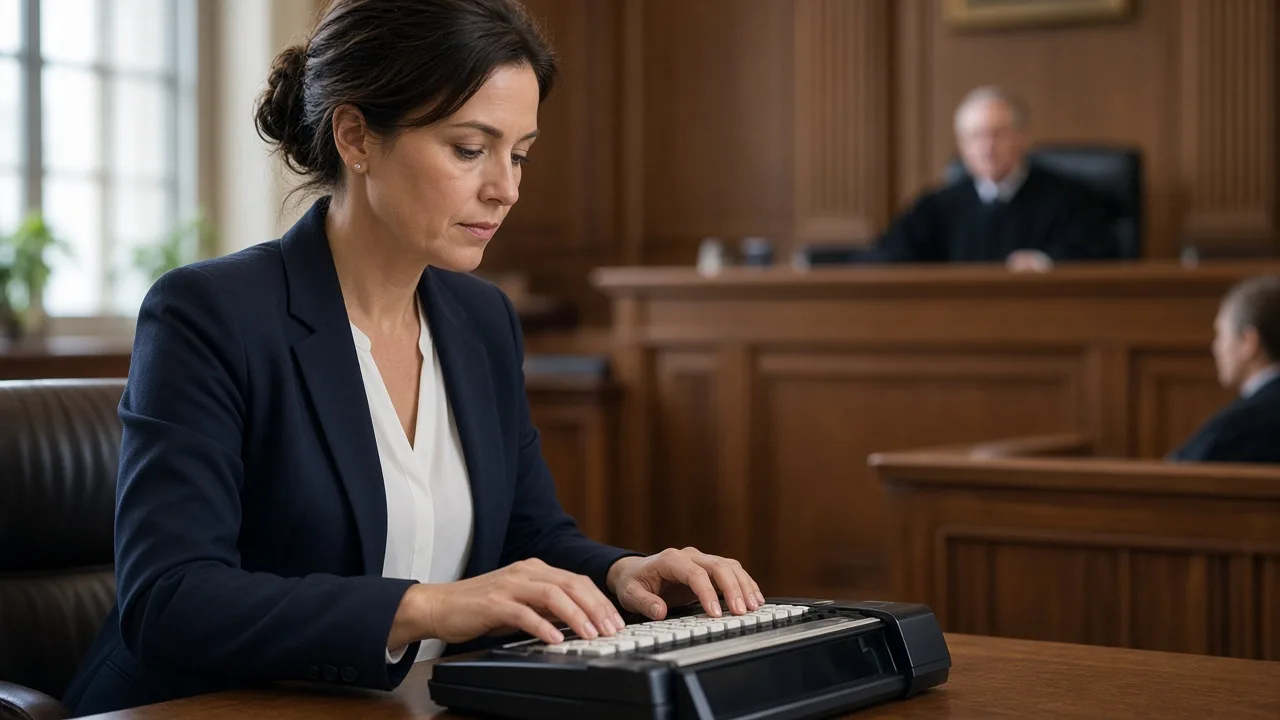
Every word spoken in a trial, hearing or deposition can matter later, whether in an appeal, a settlement discussion or a simple dispute over what a witness said. The professional responsible for capturing those words is the court reporter. The job is often invisible when it is done well, yet it sits at the center of the legal process.
Creating the Official Record
A court reporter listens to testimony, questions, objections and rulings and produces a word-for-word transcript. Most traditional reporters use a stenotype machine, a compact keyboard that records sounds in short phonetic strokes. Software then translates those strokes into readable English, and the reporter reviews and corrects the result so that the final transcript is accurate and properly formatted.
Where Court Reporters Work
Many people picture a courtroom, and official reporters do work for courts. A large share of reporters are freelance, however, and spend much of their time at depositions, arbitrations, administrative hearings and legislative sessions. A deposition is sworn testimony taken outside of court, and the transcript can later be used as evidence or to prepare for trial. Reporters may also provide real-time captioning for people who are deaf or hard of hearing at public meetings, conferences and broadcasts.
Skills That Set a Strong Reporter Apart
- Speed and accuracy: Certification programs commonly require writing at 225 words per minute with very high accuracy.
- Legal and medical vocabulary: Testimony can include technical terms, names and citations that must be captured correctly.
- Focus and neutrality: A reporter is an impartial officer of the proceeding and does not take sides.
- Professional ethics: Confidentiality and an accurate, unaltered record are core duties.
Why Accuracy Matters
A single misplaced word such as "can" versus "can't" can change the meaning of testimony. Attorneys rely on transcripts to prepare cross-examinations, cite evidence and support appeals. Judges and juries may review the written record, and a clean transcript saves time and reduces disputes. That is why many legal teams look for reporters with state certification and a track record of reliable, timely transcripts.
Technology Is Changing the Work
Real-time translation, cloud-based exhibit sharing and remote depositions over video have become routine. Reporters now manage audio quality, digital exhibits and secure file delivery in addition to writing testimony. Even with new tools, the human reporter remains responsible for certifying that the transcript is a true and accurate record.
Choosing a Reporter for Your Case
If you are scheduling a deposition or hearing, ask about certification, availability for remote or in-person sessions, expected turnaround time for transcripts and how exhibits are handled. Giving your reporter a list of party names, technical terms and case numbers ahead of time helps produce a cleaner record from the first page.
This article is general information and not legal advice. For questions about a specific case, consult a licensed attorney.

Comments are closed.